Design is Play

  • Work
    • Systems
      • March Pantry
      • CCA DLS X
      • El Pípila
      • Oriel Wines
      • Touchstone Climbing
      • Helix RE
      • Exalt App
      • Intel AppUp
      • Extole
      • CCA Craft Forward
      • Anson Mills
      • Washoe Grill
      • The Buckeye
      • Unhelpful Instructions
      • Design is Play
    • Trademarks
    • Icons
    • Books
      • Symbols
      • Dirty Baby
      • Richter 858
    • Covers
    • Posters
    • Process
  • Play
    • PLOG
      • Recent Posts
      • Play : Work
      • Play : Press
      • Play : School
      • Agitprop
      • Symbols
      • Typography
      • Playmates
      • Favorites
      • Archive
    • Publications
      • Books
      • Articles
    • Press
      • Book Reviews
      • Interviews
    • Shop
  • Meet
    • About Us
    • Clients
    • Awards
    • Contact Us

8 June, 2015

Play Press: Becoming a Graphic and Digital Designer

plog_8_JUNE.2015

“Mark Fox: The Mark Maker,” an interview with Mark Fox in the Fifth Edition of Becoming a Graphic and Digital Designer by Steven Heller and Véronique Vienne, published by Wiley. Other featured designers and illustrators include Michael Bierut, Charles Spencer Anderson, Mirko Ilic, Steve Brodner, and CCA colleague Erik Adigard, among many others.

Not all of the original interview questions and answers are included in the book. The following excerpts may be of interest to students or those with a particular love of symbol design:

SH: How do you know when it is right?

When the idea is smart or original; when the forms are beautiful or well-crafted; when I like looking at it. When possible, I strive to create trademarks that don’t simply identify, but that pull the eye and hold it; that reward repeated viewings.

French designer Philippe Starck has said that “The first rule of design is to bring happiness.” Although Starck was speaking of his own work for Jean Paul Gaultier, I nevertheless think of this quote when I design. How do I know when it is right? When it brings me happiness.

A few of the marks that others have designed that I believe are “right” and that make me happy: Allianz Versicherungs (Karl Schulpig, 1923); Piet Zwart’s personal mark, 1928; Eveready Battery (unknown, c. 1930’s); Borzoi Books (Paul Rand, 1945); Railex (Woody Pirtle, 1984); Lone Star Donuts (Rex Peteet, 1985).

SH: Marks are not supposed to be too complicated, why not?

From a purely pragmatic perspective, simple marks are more easily reproducible in a variety of media and contexts. The demands of cheap offset printing on inferior substrates (such as newsprint) have been supplanted by the demands of the screen and a 32 x 32 pixel space. Although the primary medium for display may have changed, the underlying formal problem remains unchanged.

As I tell my students, the trick is to create a mark that is simultaneously simple but distinctive; that reproduces well in one color at less than half an inch, but that nonetheless pulls one’s eye and engages one’s mind. If one can solve this problem, one can use the mark anywhere.

SH: Did anyone, like Saul Bass, influence what and how you do what you do?

Saul Bass designed some striking posters and film sequences, but he was never one of my influences.

In the context of trademarks, my first significant influence was Michael Schwab. I became familiar with Michael’s work from my mom’s issues of “Communication Arts” which she subscribed to in the 1970’s. (My mom Eunice worked as a typesetter in a print shop when I was in high school.) Michael is a master of simplified (silhouetted) forms which he uses to design his distinctive posters and trademarks. I had the good fortune to work with Michael when I first moved to San Francisco in 1985, and his bold, stripped-down approach continues to resonate with me nearly thirty years later. (Michael, it should be noted, owes some of his success to two earlier designers who implicitly understood the power of the silhouette: Ludwig Hohlwein and Lucian Bernhard.)

Although I didn’t find a copy until perhaps 1986, Leslie Cabarga published the first of his A Treasury of German Trademarks in 1982 and it was a revelation: I felt like I suddenly gained the gift of sight. Karl Schulpig! My god. And Wilhelm Deffke of Wilhelmwerk: between 1915 and 1919 this German studio pioneered a reductivist approach to trademark design that proved to be decades ahead of its time, at least when compared with American trends. Wilhelmwerk’s forms are simple, compact, and unapologetically black. (Look up Deffke’s symbol for Eisenhand to see what I mean.) In the essay “A Mentor” reprinted in his 1993 book Design, Form and Chaos, Paul Rand cites both Karl Schulpig and Wilhelm Deffke as important influences, as well as others whose work I would eventually discover, among them: F.H. Ehmcke, O.H.W. Hadank, Max Körner, Fortunato Depero, and Hans Schleger (a.k.a. Zéro).

I believe that the best trademarks have a timeless quality, and so I am not embarrassed to admit that the designers whose work inspires me the most were at their prime nearly 100 years ago. My work and approach are rooted in a tradition of craft; the challenge, of course, is to harness this tradition while nonetheless creating work that has currency.

Download the interview as a PDF.

+ SHARE Tags Play : Press/Play : School/Symbols/Typography

4 May, 2015

Play Press: Communication Arts

plog_4_MAY_2015 Communication Arts May/June 2015 Cover

We are thrilled to be featured in Communication Arts’ May/June issue. The profile of Design is Play is written by Jessica Carew Kraft and includes a range of our work, including collaborations with former Credo Creative Director Steve Lyons and Los Angeles illustrator Greg Clarke.

We especially like the summary of the article on CA’s Table of Contents page: “A master of bold identity marks and a refined typography connoisseur marry talents in a dynamic San Francisco design partnership.” The marriage is metaphorical, of course, but it is romantic nonetheless.

Thank you to Patrick and Jean Coyne for this honor, and to Jessica for the article!

+ SHARE Tags Play : Press/Play : School/Symbols/Typography

9 March, 2015

Fox/BlackDog Acquired by LACMA

©DesignisPlay Mark Fox Posters

Two posters Mark designed in the 1990’s were recently acquired by the Los Angeles County Museum of Art as part of the Marc Treib Collection. Treib is professor emeritus of architecture at the University of California, Berkeley, and his gift of over 500 posters now forms part of the Decorative Arts and Design collection at LACMA.

“5ive Iconoclasts” (left) is an offset litho poster promoting a series of lectures from the same year. The 1995 AIGA/SFMOMA Design Lecture Series featured an eclectic mix of designers and artists which included Tibor Kalman (M&Co.), Vaughan Oliver (v23), the Guerrilla Girls, Jenny Holzer, and Diller + Scofidio. The poster quotes Russian poet Vladimir Mayakovsky: “Art is not a mirror to reflect the world, but a hammer with which to shape it.”

“Republican Contract on America” (right) is a 1995 propaganda poster screen printed on chipboard. A quote by Nazi Hermann Göring is used to highlight the anti-intellectual, anti-cultural stance of the Republican-controlled 104th U.S. Congress.

See other agitprop posters at BlackDog.

+ SHARE Tags Play : Press/Symbols/Agitprop

12 January, 2015

Wang Judges Austin ADDYs

plog_12_JAN_2015

Angie recently served as a juror for the Austin, Texas leg of the American Advertising Awards’ 2015 Competition. This is the first of a three-tier competition—winners move on to a regional and then national competition.

Thank you to Bart Cleveland for this honor!

+ SHARE Tags Play : Press

8 September, 2014

Fox at the Denver Art Museum

Kinder Gentler Carpet Bombing

One of my political posters, “Kinder, Gentler, Carpet Bombing,” is now on view in the exhibition “Drawn to Action: Posters from the AIGA Design Archives.” Culled from the AIGA Design Archives at the Denver Art Museum, the 33 posters in this exhibition “demonstrate the inventive techniques designers use to provoke action.”

I designed “Kinder, Gentler, Carpet Bombing” to question the first U.S./Iraq War in 1990, and distributed the poster via fax to a few friends and colleagues. I also hung it in the windows of my house, studio, and car. (The “GTO” designation in the lower right-hand corner is an abbreviation for Graphic Terrorist Organization, a name suggested by Seattle designer Art Chantry.) This poster is also in the collection of the United States Library of Congress, Prints and Photographs Division. [MF]

See other agitprop posters at BlackDog.

+ SHARE Tags Play : Press/Agitprop

14 July, 2014

Play Press: Graphis Design Annual 2015

plog_14_JUL_2014

We are proud to note that our trademark for Dogpatch Boulders in San Francisco will be included in the forthcoming Graphis Design Annual 2015, “a collection of the year’s best work from top designers in the industry.” Our mark is a conceptual no-brainer: dog + “eyepatch” = Dogpatch. The colored X behind the dog was created with climbing tape, and reinforces the cruciform design of the dog’s face. In effect, we created a visual mnemonic for the gym.

Of the nine rock climbing gyms that our client owns, this design has proved to be the most popular with the public. They sell more shirts with the Dogpatch identity on it than any of their other gyms. Woof!

+ SHARE Tags Play : Press/Symbols

16 June, 2014

Wang at Communication Arts

plog_16_JUN_2014

Angie recently served as a juror for Communication Arts’ 2014 Design Competition—thank you Patrick and Jean Coyne for this honor! Angie arm wrestled fellow designers Stefan G. Bucher, Jo Davison, Fritz Klaetke, and Eric Thoelke to cull the entries down to the glorious few. (CA’s safety notice notwithstanding, goggles were not required.)

+ SHARE Tags Play : Press

21 April, 2014

Play Press: Design School Wisdom

plog_21_APR_2014

We are pleased to have some of our “wisdom” anthologized in this new offering from Chronicle Books which is edited by Brooke Johnson and Jennifer Tolo Pierce. Angie recalls what she learned from her first graphic design instructor at CCA, Steve Reoutt; Mark offers some simple advice about hierarchy. You can read our comments (as well as others we shared with Brooke) in one of our earlier plog posts from 4 March, 2013.

The views of many of our colleagues from CCA are represented in Design School Wisdom, including Bob Aufuldish, Leslie Becker, Rachel Berger, Dennis Crowe, Melanie Doherty, Eric Heiman, Emily McVarish, and Michael Vanderbyl. (Co-editor Brooke Johnson has taught at CCA as well.)

+ SHARE Tags Play : Press/Play : School

20 January, 2014

Play Press: Animal Logos

plog_20_JAN_2014

The latest book from Counter-Print Press (UK) includes four of our trademarks: Red Herring, The Buckeye, BO.LT, and Eveready Battery. This international collection of 266 animal logos features work from Total Identity, Lance Wyman, Build, Stockholm Design Lab, Minale Tattersfield, Stefan Kanchev, and Kari Piippo Oy, among others.

+ SHARE Tags Play : Press/Symbols

22 July, 2013

Play Press: Design Firms Open for Business

Design Firms Open for Business Book

We are pleased to be among the forty-four design firms interviewed for Steven Heller and Lita Talarico’s new book from Allworth Press. Although largely drawn from America—and, in particular, New York—the book is international in scope and includes designers from Australia, Canada, England, Germany, Israel, Italy, Japan, The Netherlands, Slovenia, South Korea, Spain, and Switzerland.

The other San Francisco designer included in Design Firms Open for Business is our CCA colleague Jennifer Morla. (Jennifer is in the “Medium Firms” section; as a two-person entity we qualify as “Small.”)

Download the interview as a PDF.

+ SHARE Tags Play : Press/Typography

10 June, 2013

Play Press: Design: Portfolio

Design: Portfolio

Two of our self-promotional pieces are included in this new book published by Rockport and authored by Craig Welsh. Design: Portfolio features our web announcement for the Design is Play site—foil stamped on playing cards by Frank La at Oscar Printing—and our 2010 New Year’s card—letterpress printed by Chip Forman, now at The Ligature.

Both of these projects can be seen at Design is Play Studio Systems.

+ SHARE Tags Play : Press/Typography

20 May, 2013

Play Press: Graphis Design Annual 2013

Graphis Design Annual 2013

Our March Pantry Packaging System received a Gold award in the new Graphis Design Annual—a full page is devoted to our oil and vinegar packaging for the San Francisco retailer. We are one of only 70 firms featured, and are proud to be in the company of our friends and colleagues Michael Vanderbyl, Kit Hinrichs, and Michael Schwab.

See our work to date for March Pantry under Design is Play Studio Systems.

+ SHARE Tags Play : Press

25 March, 2013

Play Press: New Modernist Type

New Modernist Type

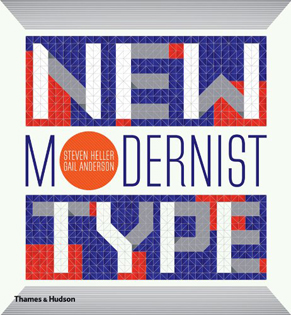
Two of our pieces are featured in Steven Heller’s latest book published by Thames & Hudson. Co-authored with Gail Anderson, New Modernist Type is an international showcase of contemporary graphic design that reinterprets the typographic tenets of Modernism. Perhaps not surprisingly, our work is included in the Meta Modern section which is subtitled “Typography as Icon and Symbol.” Our screen printed poster Getting Upper (see the 14 March, 2011 plog entry) is included, as well as the landing page image of the word “play” from our site, which was photographed by Annie Chen.

+ SHARE Tags Play : Press/Typography

4 February, 2013

Play Press: Typography 33

33rd Annual of The Type Directors Club

We are pleased to note that our March Pantry Packaging System is featured in the 33rd Annual of The Type Directors Club. Of the 1,600 competition entries from 33 countries, 223 were selected for publication by the jury. (The March Pantry Packaging System also appeared in the October 2012 online edition of Wallpaper* Magazine.)

See our work to date for March Pantry under Design is Play Studio Systems.

+ SHARE Tags Play : Press

7 January, 2013

Play Press: Communication Arts 2013 Typography Annual

Communication Arts 2013 Typography Annual

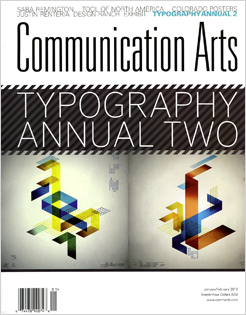
Savory design: kosher salt jars featuring the March Pantry identity are included in the recent Communication Arts 2013 Typography Annual. (We screen printed our design in metallic ink on glass apothecary jars.) Of the 1,934 competition entries, 154 were selected for publication by the jury.

See our work to date for March Pantry under Design is Play Studio Systems.

+ SHARE Tags Play : Press

11 December, 2012

Play Press: University of California monogram

plog_11.12.12

When the general public became aware that a new UC monogram had been launched to represent the University of California and its ten campuses, San Francisco Chronicle staff writer Carolyn Jones contacted me for an opinion.

Both Angie and I earned degrees from the University of California: Angie has a degree in Japanese from UC Berkeley, and I have a degree in Fine Arts from UCLA. As alumni of the UC system, the new monogram represented us—as well as hundreds of thousands of other alumni, current students, and faculty.

While I understand that the University of California needs a new symbol separate from its historic “seal,” the proposed monogram was not the appropriate solution. Branding statements or strategy documents become moot when the resulting visual identity doesn’t accurately reflect the company or institution, or “speaks” in the wrong “voice.”

The pedagogic approach of the Graphic Design department at the California College of the Arts in San Francisco where we teach is predicated on the idea of critique. Work is judged, publicly. I encourage my students to ask the following questions so that they can determine for themselves the merits of their work. For example:

Who is the audience?
What is the intended message?
Is it the right message?
How successfully does the piece communicate the intended message?
What elements contribute to the piece’s successful communication?
What elements detract from it?
Are there unintended messages?

The San Francisco Chronicle article ran on the front page on Tuesday, December 11, 2012. My comments were offered from the perspective of an instructor who believes that informed, perceptive critique can only sharpen—and thus benefit—the practice of graphic design in our culture. My quotes from the article are below. [MF]

“Utterly forgettable”

Mark Fox, a graphic design professor at California College of the Arts who designed that school’s logo and has done work for UC in the past, panned the new effort.

“The visual language is generic, commercial and utterly forgettable,” he said. “It is a complete mismatch for the university’s history and reputation. (It) has no visual or conceptual gravitas.”

A good logo should be distinct and memorable, create positive associations, reflect well on the company and work easily and inexpensively in all media, he said.

“The new UC logo,” Fox said, “fails in most of the above criteria.”

The entire article by Carolyn Jones can be found here. Three days after the article ran the University of California withdrew its support for the new symbol.

+ SHARE Tags Play : Press/Symbols

30 July, 2012

Play Press: Graphis New Talent 2012

GD1posterFinal

We are always thrilled when our students’ work from CCA is honored by inclusion in an international competition. The recent Graphis New Talent annual features the work of four students from Mark’s “Graphic Design 1: Foundation” class: Amy Compeau, Kelly Kusumoto, Vincent Romero, and May Wong.

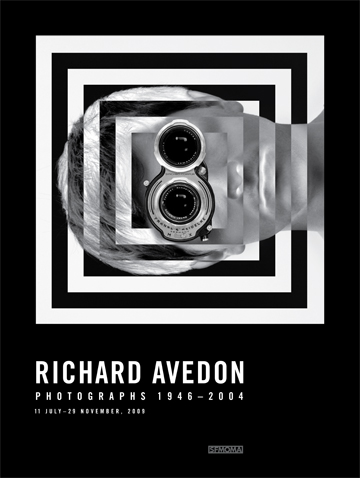
One of the winning projects is pictured above: May Wong’s poster for an exhibition of Richard Avedon’s work. According to May, the aesthetic of her poster is “inspired by Avedon’s minimalist black and white portraits. The lens from a Rolleiflex camera becomes a representation of his incisive eye for photography and how he captures his subject’s personality from a different perspective.” We must note that May shot her own photography for this poster, one of the parameters of the assignment.

CCA colleagues Bob Aufuldish and Alysha Naples also had student work selected for publication, and we congratulate them and their students for this honor.

See more examples of student poster design under Design is Play Classroom Posters.

+ SHARE Tags Play : Press/Play : School

5 March, 2012

Play Press: Graphis Logo 8

plog_05.03.12

Four mongrams and one icon system we created are included in the new logo design anthology curated by Graphis. Included are symbols for BlackDog, CCA’s Graphic Design BBQ, Four Barrel Coffee, and Group MB, as well as a system of icons we designed for Wired Magazine’s iPad app. The BlackDog monogram is a Platinum award winner, one of only ten.

The work of a number of our CCA colleagues is included in Graphis Logo Design 8 as well, including symbols designed by Jennifer Jerde and Scott Hesselink of Elixir Design, Christopher Simmons of Mine, and Michael Vanderbyl of Vanderbyl Design. This volume also features an interview with our friend—and Mark’s “boss” in 1985—Michael Schwab. Michael is one of the few designers we know of who still uses a Koh-I-Noor Rapidograph inking pen in the development of his final art.

See more examples of our trademark designs under Design is Play Studio Symbols.

+ SHARE Tags Play : Press/Symbols/Typography

9 January, 2012

Play Press: Communication Arts 2012 Typography Annual

plog_09.01.12

We are pleased to note that our March Pantry Packaging System is featured in Communication Arts 2012 Typography Annual. Of the 1,723 competition entries, 150 were selected for publication by the jury.

Check back soon for the complete March Pantry project in our Studio Systems section.

+ SHARE Tags Play : Press/Typography

5 December, 2011

Play Press: 2011 Print Regional Design Annual

plog_05.12.11

The Far West category in Print’s 31st Regional Design Annual was judged by Brigitta Bungard, Assistant Creative Director in the Museum of Modern Art’s Department of Advertising and Graphic Design. Fortunately for us, Brigitta responded to work that she believed demonstrated “a sense of craft,” and she chose three of our pieces to represent our region: an elephant icon we created for BO.LT, the CCA CraftForward symposium announcement, and our own announcement for the Design is Play website launch.

We were also quoted in the issue. In case you missed it:

Q: What visual stereotype would you eliminate from the Bay Area?

A: San Francisco, like any urban American center, is rife with folks who excel at using software to alter and recombine found images. Our culture would be richer without the ensuing visual mash-ups. They are ultimately cannibalistic. As instructors, we insist that our students create all of the imagery they work with in our classes. They shoot their own photographs, generate their own drawings, and hand-ink their symbols. We want our students to become designers who will elevate the visual culture.

We are pleased to note that a number of our CCA colleagues are also represented in the Far West category: Christopher Simmons of Mine, Michael Vanderbyl of Vanderbyl Design, and Cinthia Wen of Noon. Sputnik, CCA’s in-house undergraduate graphic design studio, is honored as well.

See the BO.LT icon under Design is Play Studio Symbols; the CCA CraftForward symposium announcement under Design is Play Studio Systems; and the Design is Play website announcement under Design is Play Studio Systems.

+ SHARE Tags Play : Press

Tags

  • Recent Posts
  • Play : Work
  • Play : Press
  • Play : School
  • Agitprop
  • Symbols
  • Typography
  • Playmates
  • Favorites
  • Books
  • Book Reviews
  • Interviews
  • Articles
  • Archive
Older
Newer

©2026 Design is Play. All Rights Reserved.