Design is Play

  • Work
    • Systems
      • March Pantry
      • CCA DLS X
      • El Pípila
      • Oriel Wines
      • Touchstone Climbing
      • Helix RE
      • Exalt App
      • Intel AppUp
      • Extole
      • CCA Craft Forward
      • Anson Mills
      • Washoe Grill
      • The Buckeye
      • Unhelpful Instructions
      • Design is Play
    • Trademarks
    • Icons
    • Books
      • Symbols
      • Dirty Baby
      • Richter 858
    • Covers
    • Posters
    • Process
  • Play
    • PLOG
      • Recent Posts
      • Play : Work
      • Play : Press
      • Play : School
      • Agitprop
      • Symbols
      • Typography
      • Playmates
      • Favorites
      • Archive
    • Publications
      • Books
      • Articles
    • Press
      • Book Reviews
      • Interviews
    • Shop
  • Meet
    • About Us
    • Clients
    • Awards
    • Contact Us

Recent Posts

8 November, 2010

Advice for Designers, Extrapolated

plog_08.11.10

Marcel Duchamp wrote, “as a painter it was much better to be influenced by a writer than by another painter,” the idea being that one should look outside of one’s creative profession for inspiration to avoid direct emulation. It is in this spirit that I enjoy considering the practice of graphic design through the lenses of other creative practices, in particular the craft of writing.

We are fans of Roald Dahl in the Fox & Wang abode, and have read a number of his books to our (collective) three children. Not long ago we read Dahl’s 1977 memoir “Lucky Break—How I Became a Writer” for the first time. On the second page he offers seven tips to would-be fiction writers that, perhaps not surprisingly, are relevant to would-be graphic designers.

Number one on that list: You should have a lively imagination.

One immediately thinks: Isn’t this obvious, for fiction writers as well as graphic designers? (Perhaps Dahl thought so, because this is the only piece of advice he doesn’t elaborate on.) After a moment, though, I have to ask: What does it mean to “have a lively imagination,” anyway?

Marcel Proust observed that “The essence of the writer’s task is the perception of connections among unlike things.” Whether writing or designing, I believe it is through seeing, through forming surprising or illuminating linkages, that one puts a lively imagination to work. It is being, in a word, playful.

A later book-length piece of advice, Anne Lamott’s Bird by Bird: Some Instructions on Writing and Life (1994) contains a number of insightful suggestions for graphic designers thinly veiled as advice to writers. In the chapters “Shitty First Drafts” and “Perfectionism,” Lamott explores the messy process of writing and the creative dangers of not allowing that process to be messy. She warns that “Perfectionism will ruin your writing, blocking inventiveness and playfulness.” And: “Tidiness makes me think of held breath, of suspended animation, while writing [read: design] needs to breathe and move.”

It is interesting to weigh Lamott’s point of view against Roald Dahl’s, especially because his fourth tip—You must be a perfectionist—appears antithetical to hers. In truth, though, I think this particular issue is more about timing, about when to seek perfection in one’s craft rather than whether to seek it at all. Lamott allows for more detours along the way, I suspect, but both she and Dahl are intent on arriving at the same destination sooner or later. [MF]

+ SHARE Tags Favorites

1 November, 2010

Michael Schwab at Play

plog_01.11.10

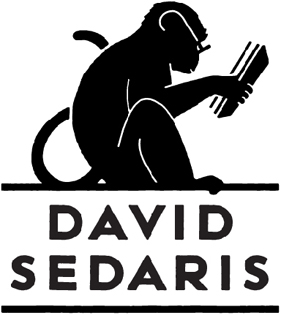
“David Sedaris’ agent called me with a request. Because David has never been comfortable with the publicity photos for his book tours and speaking engagements, he wanted me to create a logo he could use in lieu of a head shot. His concept was clear and succinct: ‘A monkey reading a book.’

“I immediately began studying monkeys—the way they sit, the way they hold objects, their tails, their postures. The David Sedaris Monkey is a simple, bold, graphic icon of which I’m proud. The process was fun and, like a good book, I didn’t want it to end. David likes it, too.”

Michael Schwab is a Bay Area illustrator and designer. We invited him to share a moment of play with us.

+ SHARE Tags Symbols/Playmates

25 October, 2010

Dennis Crowe at Play

Dennis Crowe’s “Top of the Hour” :20 Spot for MTV (3:00)
The original 1994 spot and the process of making it.

“When I consider the concept of play as it relates to the many projects I have designed throughout my career, one project in particular leaps out: the ‘Top of the Hour’ spot I designed and directed for MTV. Although this project is many years old and long gone from the airwaves, with play as the theme I couldn’t resist dusting this one off from the archives.

“I immediately knew I wanted to use a clock as the central theme and play with the idea of using the numbers on the clock as letterforms to spell out the MTV tag line ‘Plug In.’ I soon realized that by using the M from the MTV logo as the 3 on the clock I could bookend the spot with this visual trick.

“The fact that the spot was going to be broadcast repeatedly every hour on the hour gave me the excuse to overload it with visual activity so that jaded channel surfers would not get bored with multiple viewings. It became an opportunity to play with the collective attention span of a generation.

“Inspired by the dark, dreamlike, imaginative art of Mark Ryden and with trademark ‘blendo’ animation style in mind, I developed the storyboards. With the support of the fantastic production, animation, and technical crew at Colossal, we combined replacement animation, stop motion animation, live action, and archival footage into a frenetically paced explosion of imagery. Colossal Pictures’ Jenny Head, the world-class producer, made sure that I got everything I wanted including a circus performer, a rocket ship, and live animals. It took us 60 days to craft the :20 spot. I never played so hard at work in my life.”

Director: Dennis Crowe; Production Company: Colossal Pictures; Producer: Jenny Head; Technical Director: Peter Williams; Animator: Trey Thomas; Director of Photography: Don Smith; Set Design Elements: John Pappas; Set Production: Jamie Hyneman.

Dennis Crowe is a Bay Area designer and educator. We invited him to share a moment of play with us.

+ SHARE Tags Playmates

18 October, 2010

Steve Lyons at Play

plog_18.10.10

“For this net neutrality mark I made for CREDO Action, I was attempting to take a geeky tech policy issue and make it playful. The essential idea behind net neutrality is one of keeping the internet open and free from corporate control. (For more on the topic I suggest you visit Save The Internet). How better to convey freedom than to give the internet some wings? Lightning bolts add a little zap to the composition and complete the labor union retro feel. CREDO took the playfulness a little farther and made temporary tattoos as a giveaway at the progressive blogger conference Netroots Nation.”

Steve Lyons is Design Director of CREDO Mobile. We invited him to share a moment of play with us.

+ SHARE Tags Symbols/Playmates

11 October, 2010

Play at Carbon Five, 10.06.2010

plog_11.10.10

In October we were invited to present our work to Carbon Five, an agile software development company. Our presentation was notably analog, and involved a number of small scraps of paper. (Yes, we still use paper at Play!) Our design of an identity for the startup BO.LT provided a vehicle for us to discuss our process of form development and refinement.

Our preferred method of creating imagery is to draw by hand—without the “aid” of computer software. We find this allows us great freedom and, surprisingly, speed. Repeatedly drawing the same forms also forces us to look at those forms closely—to become conscious of their physical qualities in relation to each other. After creating a rough sketch we like, we make a tight inking of it using a Rapidograph technical pen. (You can see one of our BO.LT icon inkings above.)

As Angie notes, “the computer shouldn’t dictate our manner of thinking and working, nor should it displace our ability to pick up a pen and make marks on paper.” Although we use the computer to generate final art in a digital format, we relish the opportunity to work by hand in the earlier stages of our projects.

+ SHARE Tags Play : Work/Symbols

Previous
Next

Tags

  • Recent Posts
  • Play : Work
  • Play : Press
  • Play : School
  • Agitprop
  • Symbols
  • Typography
  • Playmates
  • Favorites
  • Books
  • Book Reviews
  • Interviews
  • Articles
  • Archive

©2026 Design is Play. All Rights Reserved.