Design is Play

  • Work
    • Systems
      • March Pantry
      • CCA DLS X
      • El Pípila
      • Oriel Wines
      • Touchstone Climbing
      • Helix RE
      • Exalt App
      • Intel AppUp
      • Extole
      • CCA Craft Forward
      • Anson Mills
      • Washoe Grill
      • The Buckeye
      • Unhelpful Instructions
      • Design is Play
    • Trademarks
    • Icons
    • Books
      • Symbols
      • Dirty Baby
      • Richter 858
    • Covers
    • Posters
    • Process
  • Play
    • PLOG
      • Recent Posts
      • Play : Work
      • Play : Press
      • Play : School
      • Agitprop
      • Symbols
      • Typography
      • Playmates
      • Favorites
      • Archive
    • Publications
      • Books
      • Articles
    • Press
      • Book Reviews
      • Interviews
    • Shop
  • Meet
    • About Us
    • Clients
    • Awards
    • Contact Us

15 December, 2014

Odile Redon’s The Birth of Venus

The Birth of Venus

While researching the symbolism of the shell for our (ongoing!) book project, we stumbled on an intriguing visual juxtaposition we thought we would share.

The goddess of love emerges from a seashell in The Birth of Venus by French painter Odilon Redon, c. 1912. Originating in the ocean, the shell shares water’s associations with creation and procreation, genetrix and matrix. Combined with physical characteristics which can suggest female genitalia, the shell is an emblem of fecundity and life and, by extension, felicity and prosperity.

Redon’s rendering of the shell’s elliptical silhouette and luminous interior creates a nimbus-like effect similar to the mandorla found in religious icons of the Virgin Mary or the Christ. (The lunate rim of the shell also echoes the crescent moon on which the Virgin often sits or stands.) The detail on the left is from a 13th century Byzantine manuscript in the collection of the J. Paul Getty Museum, Los Angeles.

Like the early Christian almond-shaped aureole, Redon’s seashell is maternal womb, life, light, and utterly sacred. [MF]

+ SHARE Tags Play : Work/Symbols/Favorites

24 November, 2014

Arcsine Identity

©DesignisPlay Arcsine Logo

The dimensional nature of this lowercase letter “a” monogram—comprising surface, volume, interior, and exterior—speaks to Arcsine’s comprehensive architectural practice. The subtext of this design is one of perception and, by extension, vision. The Arcsine wordmark is based on a face by Swiss designer Walter Käch and published in his book Schriften Lettering Ecritures in 1949.

The design of the Arcsine monogram came through an iterative sketching process. The form of the letter originates in the triskelion, an ancient “three-legged” glyph that symbolized progress and victory to the Greeks.

+ SHARE Tags Play : Work/Symbols/Typography

27 October, 2014

Mission Cliffs Applications

Mission Cliffs Applications

In his 1952 essay “On Trademarks,” Herbert Bayer refers to the trademark as a form of “pictorial stenography.” A good trademark is glyphic, and functions as visual shorthand for the client’s product or service. Our MC monogram for Mission Cliffs in San Francisco exemplifies this approach.

As I tell my students at CCA, the trick is to create a mark that is simultaneously simple but distinctive; that reproduces well in one color at less than half an inch, but that nonetheless pulls the eye and engages the mind. Here are two applications of the Mission Cliffs identity at extreme scales in size: lit signage above street level, and dumbbells.

A warm “thank you” to former student Sarah Devyani King for letting us use her photo of our signage! [MF]

+ SHARE Tags Play : Work/Symbols/Typography

15 September, 2014

Mission Cliffs Monogram

Mission Cliffs

We are proud to have been given the opportunity to redesign the identity of our favorite climbing gym, Mission Cliffs in San Francisco. Housed in a former foundry, the gym has an urban, industrial feel: concrete floors, steel I-beams, and a massive crane hook with the hand painted legend “20 tons of capacity.”

We thought the identity should feel empathetic with the space and so relied on simple, constructed forms. (The MC monogram is the kind of no-nonsense trademark that could be stamped out of metal, or stenciled on a machine.) The hexagonal silhouette is a reference to the bolts that are used in both indoor and some outdoor climbing to fasten anchors to the wall; the arrow both reinforces the hexagon and suggests the idea of up!

Pictured with the final design is our second inking of the monogram which is around 5 3/4 inches wide.

+ SHARE Tags Play : Work/Symbols

4 August, 2014

Design is Play Morphs!

What did Angie do this summer? Redesign our site so that it is responsive! (Mark wisely watched from a safe distance.) Our heartfelt thanks to web developer Paul Davidson and designer (and CCA Alumna) Heidi Reifenstein for helping us bring Angie’s design to life. 

Our intern, Mystique, also provided invaluable assistance with this fluid medium.

+ SHARE Tags Play : Work

10 March, 2014

Extole Identity, Website, and Collateral

plog_10_MAR_2014_2

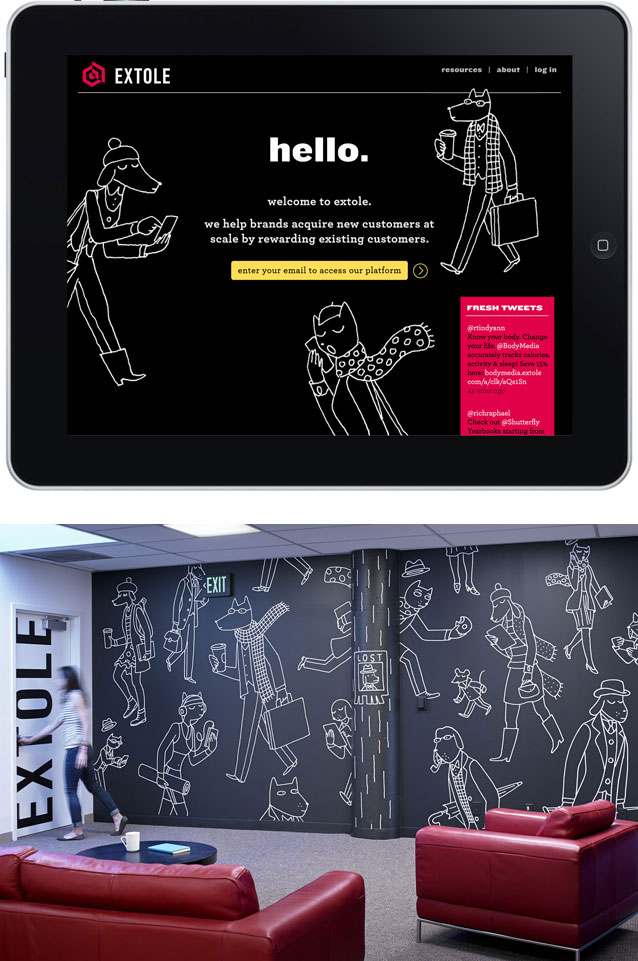
We recently redesigned the identity and online presence for Extole, a San Francisco referral marketing company specializing in new customer acquisition for its clients. We sought to humanize the “virtual” and data-driven aspects of Extole’s business by working with Los Angeles illustrator Greg Clarke to create idiosyncratic depictions of potential new customers as dogs and cats—with the occasional mouse and chimp thrown into the mix.

Business cards feature pairs of animals “sharing:” talking, listening to the same music, or exchanging information; screen printed mugs with a cat and poodle in conversation are given out to clients as a pair. Greg’s illustrations combined with the black and Day-Glo pink color palette work to create a memorable identity for Extole.

Photography by Mark Serr; Environmental photography by John Sutton.


+ SHARE Tags Play : Work

3 March, 2014

AIGA 100 Years of Design: 1914–2014

plog_03_MAR_ 2014

To celebrate the American Institute of Graphic Arts’ centennial, the AIGA asked 100 designers to create “a piece of artwork that makes a social, political or cultural statement about one year from AIGA’s history.” Mark chose the year 1958 so he could work with Gerald Holtom’s timeless symbol for Nuclear Disarmament—what would eventually become known as the “Peace Sign.” All 100 designs from the project can be seen on the AIGA site.

+ SHARE Tags Play : Work/Symbols

10 February, 2014

Play at Play: Happy Chinese New Year!

plog_10_FEB_2014

 Why, sometimes I’ve believed as many as six impossible things before breakfast. —The White Queen to Alice

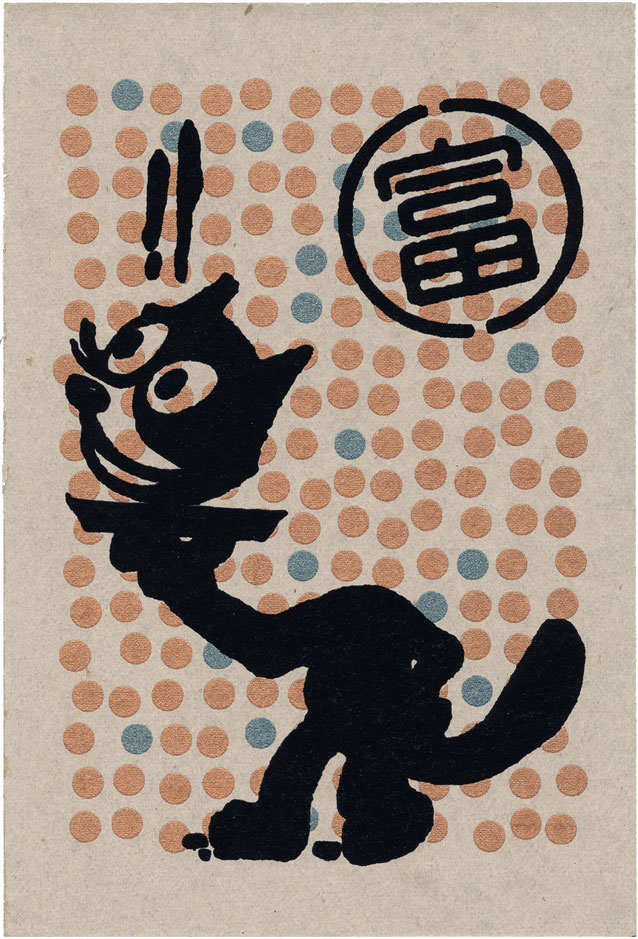
We are committed fans of the impossible here at Design is Play. In fact, our very existence as print designers in twenty-first century San Francisco seems dubious at times, but we intend to thrive here nonetheless. For those of you whose Chinese is a little rusty, the character in the upper-right corner of our card reads wealth. We wish our friends and colleagues much success in this New Year, regardless of the persistence of the “Print is Dead” crowd.

As with our 2013 Valentine, our New Year card was screen printed by Kevin Giffen at Wranch Studio in Santa Monica, California. Kevin printed the design in three colors: two metallics and a black on a ridiculously heavy chipboard stock. Angie set the Lewis Carroll passage on the back of the card in Marian 1742, a monoline slab serif and close relative of Marian Black, the face we used for our Valentine.

+ SHARE Tags Play : Work/Favorites

27 January, 2014

CREDO Mobile Iconography

plog_27_JAN_2014

Our friend and colleague Steve Lyons asked us to develop a series of political “issue” icons for CREDO Mobile, San Francisco’s progressive phone company. We are proud CREDO customers, so it was a delight to put our talents to work on behalf of our left-leaning phone carrier. Left to right, top to bottom: Women’s Rights, Universal Healthcare, Peace, Workers’ Rights, Social Justice, Renewable Energy, Economic Justice, Marriage Equality, Environment, Voting Rights, and Workers’ Rights (alternate version).

+ SHARE Tags Play : Work/Symbols

9 September, 2013

CCA Graphic Design Program Avatar

Not that CCA’s Graphic Design Program needed a Facebook avatar, but, what the hell. Here is Mark’s original inking for the surprisingly energetic skull, as well as CCA alumna Nami Kurita displaying the die-cut sticker version of the design on her iPhone. Design or Die!

+ SHARE Tags Play : School/Play : Work/Symbols

14 February, 2013

Play at Play: Happy Valentine’s Day!

Love

If love was a train I’d throw my body right down on her tracks. —Michelle Shocked

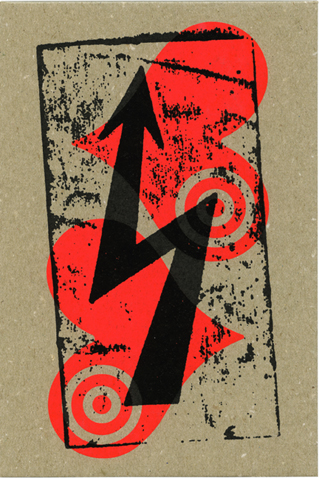
Our most recent labor of love features two hearts with targets juxtaposed with a bolt. We drew the heart glyph; the bolt was lifted from a warning sticker marking high voltage on a Canadian ferry. As we love ink on paper, we screen printed our design on hefty chipboard to render the ephemeral greeting a bit less so.

Kevin Giffen from Wranch Studio in Santa Monica, California, printed the art: two hits (wet on wet) of fluorescent pink followed by one hit of black. Mark worked with Kevin at Wasserman Silk Screen Co. thirty years ago, and we are thrilled to be working with him again. Angie set the Michelle Shocked lyric on the back of the card in Marian Black, a monoline blackletter that we customized for readibility.

+ SHARE Tags Play : Work/Symbols/Favorites

21 January, 2013

Site Updates

Art Book

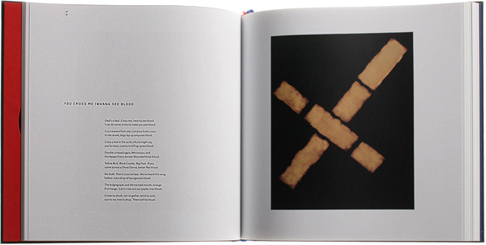
We recently added some work to our site—some new, some old—including the web site we designed for Anson Mills; two art books, one featuring the work of Ed Ruscha and the second featuring the work of Gerhard Richter; and some examples of hand-inked trademarks and typography.

We hope you enjoy!

+ SHARE Tags Play : Work

29 October, 2012

Dogpatch Boulders Identity

plog_29.10.12 Dogpatch Boulders Identity

Touchstone Climbing is at it again, this time adding a new bouldering gym in the Dogpatch section of San Francisco, south of downtown. Slated to open in early 2013, the gym will feature prefabricated walls manufactured by the Bulgarian company Walltopia.

Our design is a conceptual no-brainer: dog + “eyepatch” = dogpatch. The colored X behind the dog was created with climbing tape, and reinforces the cruciform design of the dog’s face. Touchstone wanted the new identity to feel “urban.”

See other trademarks we have designed for similar clients under Design is Play Studio Symbols Trademarks Sports and Entertainment.

+ SHARE Tags Play : Work/Symbols

23 April, 2012

March Pantry Identity and Packaging System Application

March Pantry

We recently completed a section on our site featuring our identity and packaging system for March Pantry. Hearth and home are central to the store’s concept, and the shop stocks seasonal jams made especially for March by LouLou’s Garden, select spices from Le Sanctuaire, pots and pans from Brooklyn Copper Cookware, and handmade butcher block tables from Union Studio.

Our hand-lettered wordmark is printed and embossed on die cut labels with a laid finish; it is screen printed when applied to apothecary jars. The design is understated but invitational. (So far the system has won awards for typography from both Communication Arts and the Type Directors Club.) Photographer Kirk Amyx documented the work.

See our work to date for March Pantry under Design is Play Studio Systems.

+ SHARE Tags Play : Work/Typography

21 November, 2011

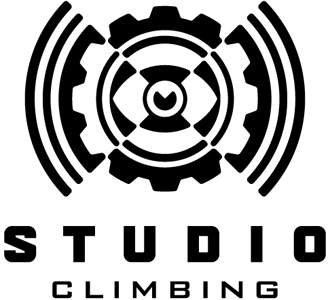
Studio Climbing Identity

plog_21.11.11

Touchstone Climbing is opening yet another gym, this time in downtown San Jose, California. Located in a former movie theater called Studio, the building features a classic 1950 channel lettering neon sign. As part of our visual research, we took photographs of the signage while atop an electric scissor lift 30 feet above the street so we could capture the images without distortion. These photographs ultimately became the basis of hand-inked studies with which we created custom lettering.

The eye and gear symbol we designed references the history of the building as a theater, and is inspired by ideas of projection and seeing. The art was meticulously crafted to optically pulsate: it both radiates outward as it simultaneously contracts inward to the center. Noted speed climber Hans Florine summarizes the new Studio identity on Facebook with the phrase “I got my eye on your gear.”

+ SHARE Tags Play : Work/Symbols/Typography

7 November, 2011

March Trunk Show Invitation

plog_07.11.11

Our friends at March asked us to design an invitation to a trunk show of apparel conceived by interior designer Sam Hamilton of March and textile and clothing designer Matt Dick of Mato Creative. Inspired by a mid-century photograph of a newspaper seller wearing a white paper apron with oversize headlines (i.e. “Football Results”), the invitation is screen printed on Tyvek. Matt transformed the flat piece into an apron by adding metal grommets and cotton ties, and then folding it.

Our original intention was to hand set the invitation text with xeroxes of hot metal type from an old Linotype specimen book, pasting it up one letter at a time. As sometimes happens, though, March fell in love with Angie’s rough sketch, and this became the basis of the final art. (The rough sketch is 3 1/2 inches wide—we enlarged it 1000% to the final width of 35 inches.) We like the contrast between the warmth and imprecision of Angie’s hand-traced type and the machined quality of Tyvek.

+ SHARE Tags Play : Work/Typography

26 September, 2011

Play at RE:DESIGN / Creative Directors, 11.07.2011

plog_26.09.11

We have been invited to speak at the RE:DESIGN / Creative Directors Conference in Palm Springs this November. The conference will open with a keynote conversation with Paula Scher; other presenters include a number of our friends and colleagues from California College of the Arts in San Francisco. The topic of our conversation will be “Get Back: Working Analog in a Digital World.” Don’t forget to bring pens and paper!

+ SHARE Tags Play : Press/Play : Work

19 September, 2011

March Pantry Identity and Packaging System

MFox_ 068

We recently designed an identity and packaging system for March Pantry in San Francisco, a new venture from retail store March. Mark created the original identity for March in 2003, one year after Tobias Frere-Jones’ Gotham became available to the public. Eight years later, Gotham has become so ubiquitous as to be invisible; as a result, we needed to create an identity for March Pantry that related to March’s use of Gotham Light, but that varied enough to be distinctive.

The ensuing type treatment is built on Gotham’s bones, but it deviates in significant ways. Foremost among the changes: we eliminated variations in stroke weight, redrawing the letters as monoline forms. In addition, we gave the leg of the R a modest lilt, and we rounded all of the external corners and terminals to soften the typographic “voice.” Finally, the implied geometry (and symmetry) of the original are fully realized: the letter C is based on a perfect circle, and the M is absolutely symmetrical. The net effect, in some sense, is to “de-design” the face, returning it to its vernacular roots. At least that’s how we think of it.

The tactility of embossed lettering on the printed label—as well as Angie’s handwriting—provides a warm contrast to the set type. Offset lithography and registered embossing by Oscar Printing; photography by Kirk Amyx. We will show more applications in due course….

+ SHARE Tags Play : Work/Typography

29 August, 2011

New Work: Cengage Learning Book Covers

plog_29.08.11

We recently updated the section on our site featuring textbook covers we designed for Cengage Learning. Covers in this genre tend toward the literal, and rely heavily on stock photography. We aim to be metaphorical in our design approach, and to author our own images whenever possible. Each cover in this section features original photography, iconography, or typography.

See more examples of recent cover designs for Cengage Learning under Design is Play Studio Covers.

+ SHARE Tags Play : Work/Typography

30 May, 2011

CCA Craft Forward Symposium 2011 Applications

plog_30.05.11

We recently completed a section on our site featuring applications of the Craft Forward identity. To create variation within the system, we utilized a range of reproduction methods. We combined foil stamping, letterpress printing, offset lithography on a web press, laser printing, and screen printing with a mix of substrates, including chipboard, newsprint, DayGlo paper, and cotton organza. Photographer Mark Serr documented the work for us.

See the complete Craft Forward project under Design is Play Studio Systems.

+ SHARE Tags Play : Work/Symbols

Tags

  • Recent Posts
  • Play : Work
  • Play : Press
  • Play : School
  • Agitprop
  • Symbols
  • Typography
  • Playmates
  • Favorites
  • Books
  • Book Reviews
  • Interviews
  • Articles
  • Archive
Older
Newer

©2026 Design is Play. All Rights Reserved.