Design is Play

  • Work
    • Systems
      • March Pantry
      • CCA DLS X
      • El Pípila
      • Oriel Wines
      • Touchstone Climbing
      • Helix RE
      • Exalt App
      • Intel AppUp
      • Extole
      • CCA Craft Forward
      • Anson Mills
      • Washoe Grill
      • The Buckeye
      • Unhelpful Instructions
      • Design is Play
    • Trademarks
    • Icons
    • Books
      • Symbols
      • Dirty Baby
      • Richter 858
    • Covers
    • Posters
    • Process
  • Play
    • PLOG
      • Recent Posts
      • Play : Work
      • Play : Press
      • Play : School
      • Agitprop
      • Symbols
      • Typography
      • Playmates
      • Favorites
      • Archive
    • Publications
      • Books
      • Articles
    • Press
      • Book Reviews
      • Interviews
    • Shop
  • Meet
    • About Us
    • Clients
    • Awards
    • Contact Us

21 March, 2011

MetalMark Naming and Identity

plog_21.03.11

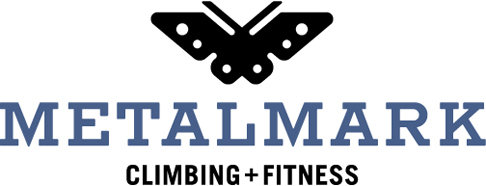
Touchstone Climbing is opening a gym in Fresno, California, and we were asked to develop its name and visual identity. We named the new gym MetalMark after a native California butterfly with distinctive, metallic markings. We were inspired by the simple idea of metamorphosis, by the physical and mental changes we undergo as rock climbers. The form of our butterfly symbol is transformed as well: it is modeled on the engineered aluminum cams used in outdoor rock climbing.

The MetalMark logotype is set in Rockwell Antique, a slab serif typeface issued in 1931. As a cast-metal typeface, we like the connection between the materiality of the original type (metal) and the name MetalMark. The typeface is not available commercially, so we redrew the letters by hand before creating the art digitally.

+ SHARE Tags Play : Work/Symbols/Typography

14 March, 2011

Play at the Pasadena Museum of California Art

plog_14.03.11

Curator Amos Klausner charged twenty-six designers with re-imagining one letter from the alphabet, using the illegibility and deconstructive nature of graffiti as their starting point. (We chose the letter A.) The ensuing exhibition, Getting Upper, will open at the Pasadena Museum of California Art on May 15, 2011.

Our lowercase letter a is derived from Albrecht Dürer’s schema for blackletter construction published in 1538. Dürer’s line drawing breaks down the letter into component parts to reveal its design. We subvert this intent by reversing the diagram, flipping the negative spaces to positive ones. The resulting segments are then printed in a palette of modulated colors that further fragment (and deconstruct) the constructed letter. Our poster layout utilizes Jan Tschichold’s non-arbitrary page proportioning system to suggest a book page with the image area as the text block.

Each of the twenty-six letters will be published as a screen printed poster by Bloom Screen Printing Co. and made available for sale at the museum and online.

See more examples of our poster designs under Design is Play Studio Posters.

+ SHARE Tags Play : Press/Play : Work/Typography

2 February, 2011

Play at Play

plog_02.02.11

To announce the launch of the Design is Play website, we created a mailing based on the idea of play. Playing card backs are overprinted with an LCD grid to suggest infinite possibilities: depending on which portions of the grid are “lit,” any letter or number can be constructed. The LCD grid as a programmable system is an apt analogy for our studio as well as the web.

Card fronts are overprinted with a “window” which both frames and reframes the original design, forcing the viewer to reconsider the familiar schema. Like the LCD grid, the window suggests a larger idea: a screen with an infinite number of views. The playing cards were foil stamped by Oscar Printing, San Francisco. (Photos by Mark Serr.)

See more playing cards under Design is Play Studio Systems.

+ SHARE Tags Play : Work/Typography

24 January, 2011

Minniti McMurtrie Identity

plog_24.01.11

We designed this identity for San Francisco fashion designer Jennifer Minniti and architect Darren McMurtrie. The letterforms are modeled on Banjo, a titling face released by the French foundry Deberny & Peignot in 1930. The wide versions of the letters provide cues to the pronunciation of their names as they roughly correspond to the stresses. (For example, the first R is held longer than the second R in McMurtrie.)

See more examples of our identity designs under Design is Play Studio Trademarks.

+ SHARE Tags Play : Work/Symbols/Typography

5 January, 2011

CCA Craft Forward Symposium 2011 Identity

plog_05.01.11

Craft Forward is a forthcoming symposium at California College of the Arts that will explore the boundaries between craft, art, design, architecture, and writing. We were engaged to create the identity for the symposium and to design its promotional materials.

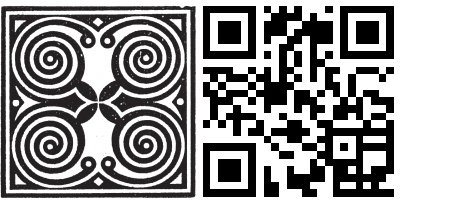
Our solution juxtaposes two square glyphs: a circa 1909 typographer’s ornament (symbolizing craft), and a QR code (symbolizing forward). The QR (or Quick Response) code can be scanned with a smart phone which then directs the user to the Craft Forward website. In this context the QR code functions as a modern ornament, but one with embedded content.

See the Craft Forward identity applied to a foil stamped postcard under Design is Play Studio Systems. (More applications to come….)

+ SHARE Tags Play : Work/Symbols

11 October, 2010

Play at Carbon Five, 10.06.2010

plog_11.10.10

In October we were invited to present our work to Carbon Five, an agile software development company. Our presentation was notably analog, and involved a number of small scraps of paper. (Yes, we still use paper at Play!) Our design of an identity for the startup BO.LT provided a vehicle for us to discuss our process of form development and refinement.

Our preferred method of creating imagery is to draw by hand—without the “aid” of computer software. We find this allows us great freedom and, surprisingly, speed. Repeatedly drawing the same forms also forces us to look at those forms closely—to become conscious of their physical qualities in relation to each other. After creating a rough sketch we like, we make a tight inking of it using a Rapidograph technical pen. (You can see one of our BO.LT icon inkings above.)

As Angie notes, “the computer shouldn’t dictate our manner of thinking and working, nor should it displace our ability to pick up a pen and make marks on paper.” Although we use the computer to generate final art in a digital format, we relish the opportunity to work by hand in the earlier stages of our projects.

+ SHARE Tags Play : Work/Symbols

23 August, 2010

Intel AppUp Center Identity

plog_23.08.10

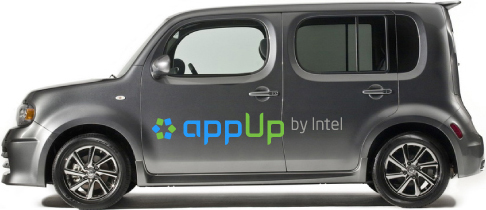
We recently worked with Razorfish San Francisco to conceive a new identity for Intel’s AppUp center, a web initiative devoted to enhancing the functionality of Intel netbooks. Our identity features a star pattern and custom typography whose forms are based on the rounded square found in app icon silhouettes. The pattern is endlessly repeatable in a reference to the extensive range of apps available as well as to the idea of “cloud” computing.

+ SHARE Tags Play : Work/Symbols/Typography

9 August, 2010

Cengage Learning Book Cover

plog_09.08.10

We designed the cover for the latest edition of Concepts of Chemical Dependency, a text for undergraduate and graduate counseling classes. Prior cover designs for this title tended to be literal and almost encyclopedic in their attempt to illustrate myriad drugs. Our approach is metaphorical and minimal, and relies on our photograph of a single, iconic hook. The image is both seductive and dangerous, not unlike some addictive substances.

See more examples of recent cover designs for Cengage Learning under Design is Play Studio Covers.

+ SHARE Tags Play : Work/Symbols/Typography

19 July, 2010

Anson Mills Identity and Packaging System

plog_19.07.10

Anson Mills of Columbia, South Carolina, is unique in contemporary food culture: they specialize in cold milling organic heirloom grains—all of them dating from the antebellum South and bred exclusively for flavor. They are zealously committed to regional authenticity and, as a result, have garnered a devoted following among America’s best chefs.

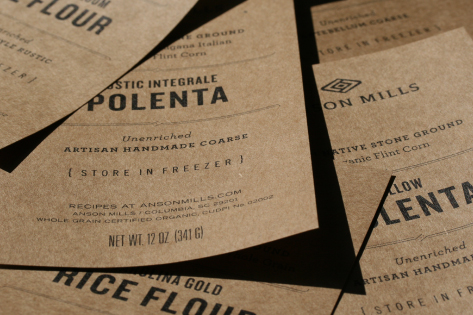
Grain is life: our logo is derived from the merging of the Hopi breath glyph with a stylized seed (the enclosed diamond). Our approach to Anson Mills’ packaging labels is similarly direct: the type-only design is flexible enough to accommodate twenty-eight separate products in varying sizes.

+ SHARE Tags Play : Work/Symbols/Typography

14 June, 2010

Fox at Landor, 06.03.2010

plog_14.06.10

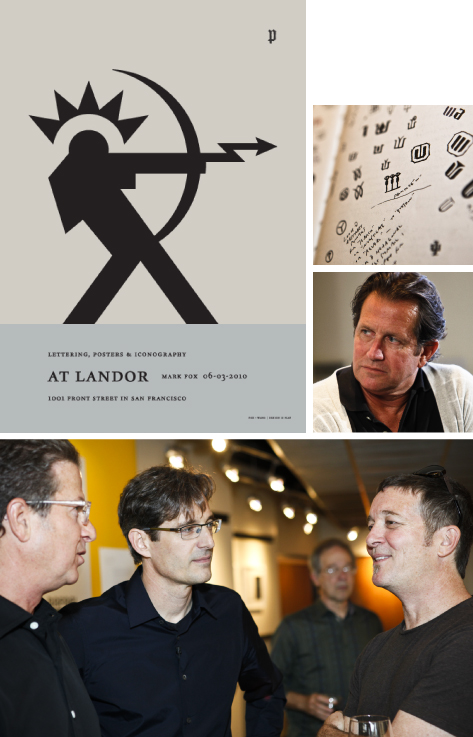
Courtney Reeser, Managing Director of Landor Associates in San Francisco, invited Mark to exhibit and speak about his work “at Landor.” The exhibit encompassed work from Design is Play and BlackDog, and included logos, identity systems, posters, book covers, prints from Mark’s Erotikon series and, for the first time, seven of Mark’s personal sketchbooks. Mark had the honor of being introduced by his friend and colleague Michael Schwab. (Photos by Michael Friel.)

Watch excerpts of Mark Fox’s conversation with Courtney Reeser:

Fox at Landor 1 (2:09)
On Michael Schwab, clubbing baby seals, and perfection as the default.

Fox at Landor 2 (1:49)
On the “filter” of the computer and the homogenization of design.

Fox at Landor 3 (3:37)
On teaching Graphic Design 1 and hand-inking.

+ SHARE Tags Play : School/Play : Work

3 June, 2010

Wired Magazine iPad App Iconography

plog_01.06.10

Wired Magazine asked us to develop two sets of icons for their groundbreaking iPad app which launched in May, 2010. We designed the app’s global user interface icons which function at a size of 20 × 20 pixels; we also created interactive icons to navigate this multisensory edition of Wired. (Interactive icons include Play Video, Play Audio, Swipe Left to Right, and 360° View.) The covers of the first two issues feature our Play Video icon.

Read an interview with Wired’s Scott Dadich by Joshua Gorchov from The Loud Cloud. Download Wired’s iPad app from Apple.

+ SHARE Tags Play : Work/Symbols

8 February, 2010

Play Press: TDC Typography 30

plog_08.02.10

Our hand-lettered identity for One Catering is featured in the 30th Annual of The Type Directors Club. Drawing from the flavors of eight distinct restaurants, One Catering is the E pluribus unum of Charlotte, North Carolina. Different numeral ones are grafted together to form an identity that is both singular—one—and diverse.

+ SHARE Tags Play : Press/Play : Work/Typography

Tags

  • Recent Posts
  • Play : Work
  • Play : Press
  • Play : School
  • Agitprop
  • Symbols
  • Typography
  • Playmates
  • Favorites
  • Books
  • Book Reviews
  • Interviews
  • Articles
  • Archive
Newer

©2026 Design is Play. All Rights Reserved.